
EXPLORE the Møns Klint with this slideshow, check the location map and get all the facts and information below.
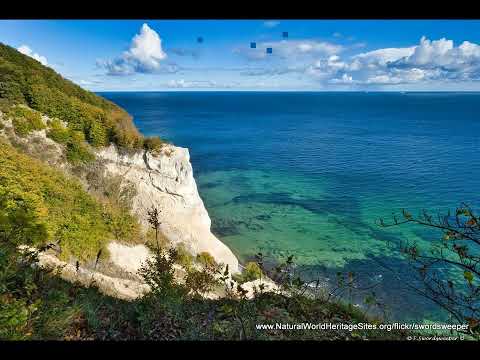

For slideshow description see right or scroll down (mobile). Click to view slideshow
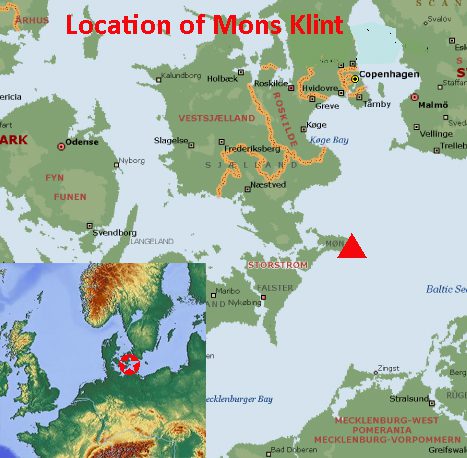
Location and Values: Mons Klint is a small geological site occupying the easterly portion of the island of Mon, about 100 km south of Copenhagen. The most striking feature of the site is a 6km stretch of white cliffs, jagged towers of white chalk up to 120m in height above the turquoise waters of the western Baltic Sea with black flint beaches below and protected beech forests on top. This spectacular shoreline provides a remarkable insight into geological processes which took place during the Pleistocene ice ages 115,000 to 11,700 years ago. They provide a cross-sectional view of the geological structure of the rocks that underlie the forest and farmland of the island as a whole. Erosion from waves and weather continuously changes the exact profile of the cliffs keeping the surface fresh, white and well exposed.
Appreciation of the site’s global significance requires an understanding of its geological history. The nomination dossier provides full technical details but in simple terms the cliffs and interior landscape show how the massive ice fields and glaciers of the Pleistocene era impacted the Earth’s crust. As ice fields advanced they created hills by ‘bulldozing up’ some of the surface rock strata in their path, while glaciers scoured these new landscapes into tell-tale new forms. The Mons Klint landscape (including the island’s hinterland) protects one of the world’s largest such ‘glaciotectonic complexes’ and includes evidence of how it was formed in three phases during cyclical periods of glacial advance and retreat as the climate changed. Visitors to the site can observe fault lines and folds created by the fracture of ‘brittle’ rocks and ‘plastic deformation’ of others by following the broken lines of black flint rocks embedded in the jagged white cliffs.
Conservation Status and Prospects. According to IUCN’s evaluation of the site at the time of its nomination (in 2024-5), the site is well managed and its geological features are intact. The main threats which may affect its integrity are coastal erosion and climate change, which are being monitored. In addition an increase in tourism is anticipated and associated infrastructure development needs to be carefully managed to protect the site’s natural landscape attributes.
LINKS:
Slideshow description
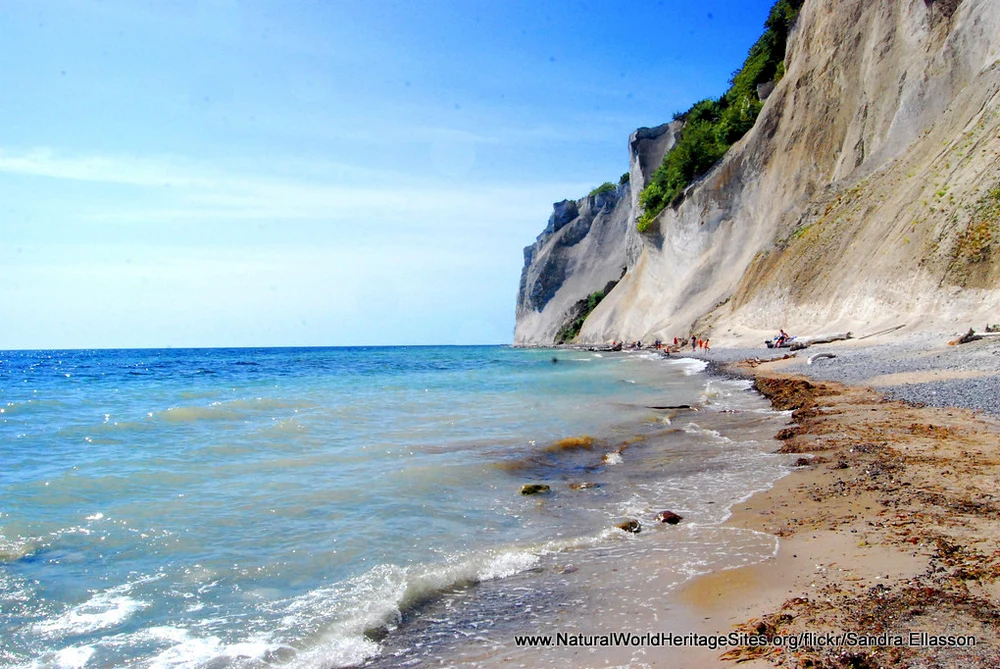
Slideshow Description: The short slideshow provides a perspective on Møns Klint with a portfolio of photos taken from the beach and cliff tops. These show clearly some of the fault lines and jagged cliff faces that are the result of fractures in the Earth’s crust caused by the massive weight of ice fields and the power of flowing glaciers during the last ice age. The beach is strewn with black flint pebbles that have fallen from the cliffs as the erosive force of waves, wind and rain continue to erode the cliff face.
The following Flickr photographers and other sources are acknowledged with thanks for their contributions to this slideshow (as indicated in the watermarks of each photo): Thieschi; swordsweeper; Gerard Mahieu; Hermann.kl; ursonroute66; Sandra Ellasson; xveair and keeck23.
Factfile
Website Category:
Area: 41 km2
Inscribed: 2025
Criteria:
- Geological features (viii);

