
EXPLORE the Aqaba Marine Reserve with this slideshow, check the location map and get all the facts and information below.
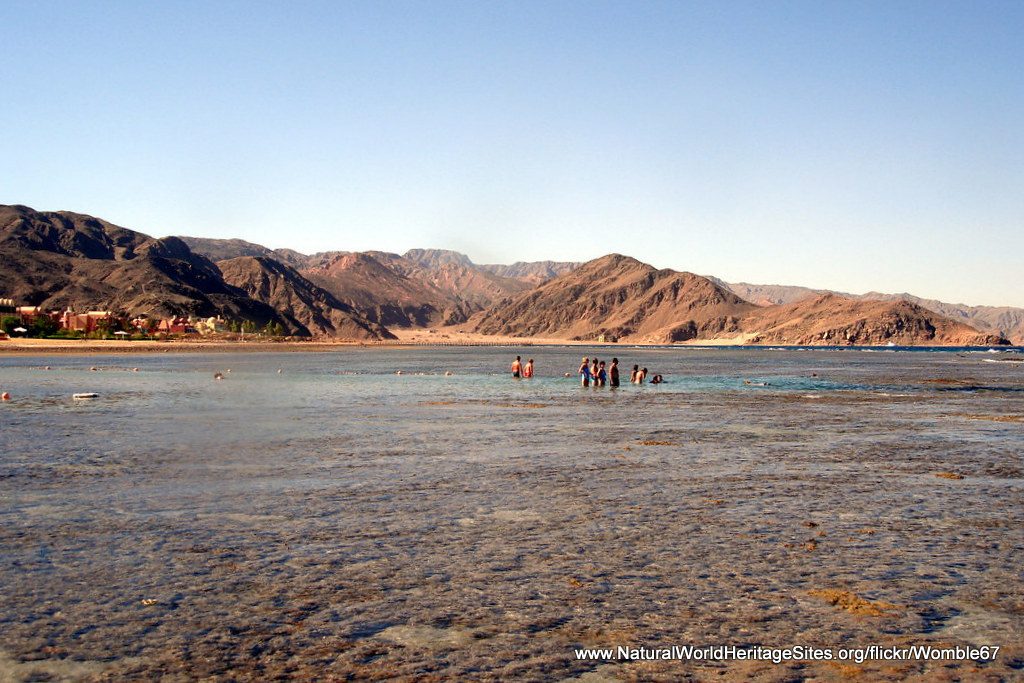
For slideshow description see right or scroll down (mobile). Click to view slideshow
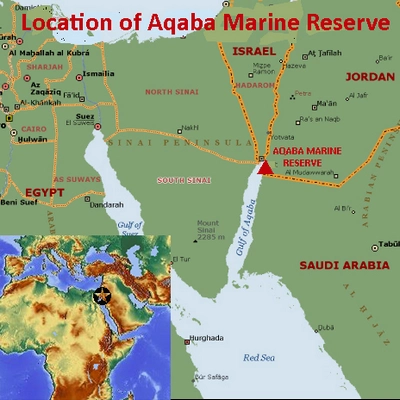
Location and Values: The Aqaba Marine Reserve is located along Jordan’s Red Sea coast in the far northeastern tip of the Gulf of Aqaba. It is recognized as the world’s most northerly tropical coral reef system, although it lies outside the tropics, some 700 km north of the Tropic of Cancer. Here, the corals and other fauna exist at temperatures significantly below their normal thermal limits and have evolved an exceptionally high level of resilience to hostile climate conditions such as temperature and salinity extremes. This makes the site important for climate-related research and as a genetic repository for climate-resilient marine species.
The Aqaba Marine Reserve is one of the smallest marine reserves on the World Heritage List, occupying just 7km of coastline (about 2% of the Gulf of Aqaba coastline and a tiny fraction of the area of the wider Red Sea). It incorporates a complex of interacting marine habitats including shallow fringing reefs, reef flats, fore-shore slopes and deeper benthic habitats as well as some sea-grass beds and inter-tidal areas. These habitats support an enormous diversity of marine species, including 157 species of hard coral (45% of all Red Sea hard corals), 500 species of fish (out of a Red Sea total around 1-2,000 species) and 1000 species of molluscs. Many of these marine species are endemic to the Red Sea, including 88 of the fish species recorded in the reserve.
Conservation Status and Prospects. The Aqaba Marine Reserve is currently in a near-pristine state and under sound management with close monitoring. It is however highly vulnerable to various potential threats due to its very small size and low inherent resilience to external pressures. The most significant threats include:
- Proximity of major developments. These include a major hotel complex, several ports, a shipyard, marina, naval base, oil refinery, potash and mining company depots and export terminals. These are all located within the reserve’s buffer zone or just beyond. The cities of Aqaba (Jordan) and Eilat (Israel) are both within 10-12 km of the reserve.
- Pollution and oil spills. Given the volume of marine traffic and proximity of two major cities, an oil refinery and numerous chemical plants the risk of accidental pollution is high.
- Sediment runoff. Given the amount of construction and other activities in the area the possibility of sediment runoff during the occasional rains is high.
- Over-Fishing. Although fishing is not permitted within the reserve and is restricted elsewhere in the Jordanian portion of the Gulf, the small size of the reserve means that larger, more mobile species may be subject to over-fishing as they traverse other unprotected areas nearby.
- Invasive species. Considering the large volumes of marine traffic using this part of the Gulf, there is a significant risk that invasive species will be introduced through attachment to ship’s hulls or release of ballast water from elsewhere.
- Vulnerable populations of keystone species. The small size of the reserve means that it cannot support viable populations of many larger species such as dolphins, sharks, turtles and larger species of fish because they require much larger areas to survive, interact and breed successfully. Consequently the complex ecological interactions and high biodiversity that currently exists is heavily dependent on successful conservation of the wider seascape across the northern part of the Gulf of Aqaba
- Tourism. In view of the large numbers of tourists engaging in water sports, diving and snorkeling, some damage to corals from boat anchors and direct contact is inevitable.
- Climate change. One of the outstanding features of the Aqaba Marine Reserve which qualifies it for World Heritage listing is the exception resilience of its corals to climate extremes. This should enable the diverse marine ecosystem to persist and flourish here, where other reefs elsewhere in the world are vulnerable to bleaching events and mass die-offs. But the possible future impact of climate change remains difficult to predict.
Slideshow description
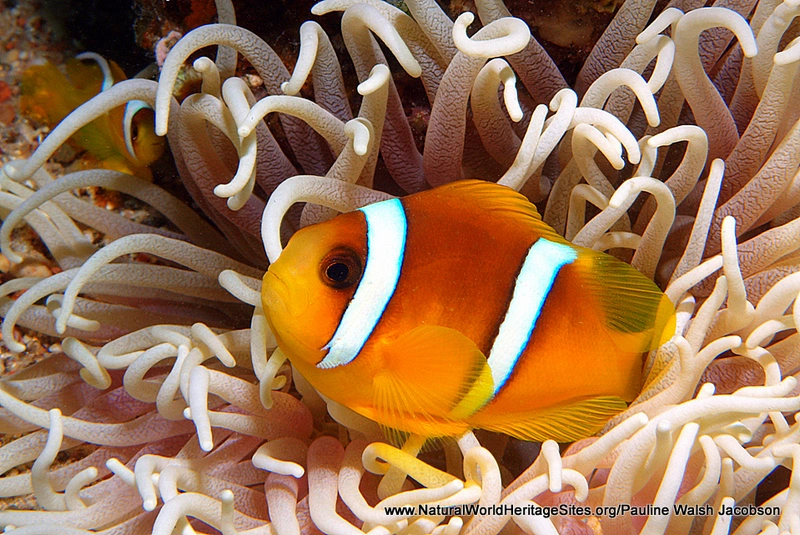
The slideshow illustrates some of the coastal features of the Gulf of Aqaba and underwater photographs of some of the reserve’s fish, corals, and other invertebrates. The diversity of fish is extraordinary, with every conceivable niche occupied by species of different size, shape and colour. There are huge hump-headed wrasses and coral groupers, graceful butterfly fish and angels, hidden Jayakar’s seahorses, Little Dragonfish and venomous Reef Stonefish. Smaller reef inhabitants featured in the slideshow include Red Sea Anemone Fish, tiny Network pipefish, Steinitz prawn goby and Smooth-fin blenny, sharing the reef with various ambush predators, lionfish, variegated lizardfish, speckled sandperch, geometric moray eel and blue-spotted ribbontail ray. There are several species of Trigger Fish, Surgeon, Moses Sole and Burrfish occupying other niches in this extraordinary display of marine biodiversity.
The slideshow illustrates the diversity of hard and soft corals found in the Aqaba Marine Reserve, as well as other invertebrates such as Day Octopus, Giant Clams, Feather Stars, Nudibranchs, Red Sea Fire Urchin and Anemone Hermit Crab. The photos are provided through flickr by photographers Pauline Walsh Jacobson, 3ric Johanson, Matt Kieffer, Sylwester Sokolowski, Jesse4870 and Womble67. Photo credits are provided in the watermarks of each image.
Factfile
Website Category:
Marine & Coastal
Area: 7 km²
Inscribed: 2026
Criteria:
- Ecological processes (ix);
- Natural habitat for biodiversity (x);
- Significant number of rare, endemic and/or endangered species (x)

