EXPLORE the Bony Fish Fossils of the Western Limfjord with this slideshow, check the location map and get all the facts and information below.
For slideshow description see right or scroll down (mobile). Click to view slideshow
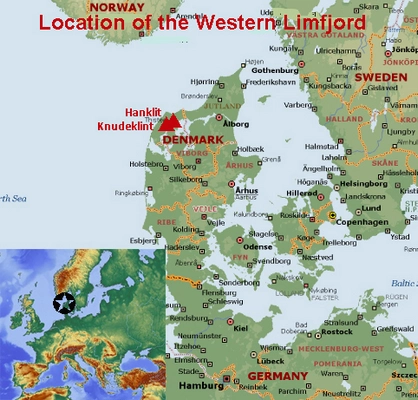
Location and Values: The World Heritage Site (known officially as ‘The Bony Fish Fossils of the Western Limfjord – Evolution and Climate Adaptation in the Earliest Eocene’) comprises two separate small areas of coastal cliffs on the islands of Mors and Fur in Denmark’s Western Limfjord sea. The cliffs contain some of the best preserved fossil fishes in the world, together with other marine and terrestrial organisms covering the period after the ‘fifth mass extinction’ event that marked the end of the Cretaceous Period (66 million years ago, the end of the dinosaurs), through the Paleocene (66-56 years ago) and into the earliest years of the Eocene epoch (56-34 million years ago).
The site is especially important because of its rich fossil record covering the very warm climatic conditions of the Paleocene-Eocene Thermal Maximum (PETM) and the cooler period that followed. The PETM was one of the most intense, rapid periods of global warming in Earth’s geological history about 56 million years ago. Over just a few thousand years, enormous quantities of greenhouse gases flooded the atmosphere. Global temperatures spiked by 5°C to 6°C (9°F to 11°F) causing ocean acidification and widespread extinctions. The entire event lasted about 170,000 to 200,000 years before natural carbon sinks gradually drew the excess greenhouse gases out of the atmosphere. The causes of the sudden influx of greenhouse gases are still debated but massive volcanic eruptions, such as those associated with the opening of the North Atlantic Ocean as the continental plates split apart are thought to be responsible, releasing large amounts of carbon into the air. Clearly, there are important parallels with the present era of man-made global warming.
The fossils of the Western Limfjord cliffs show how the extreme climate changes of the PETM and following cooler periods resulted in profound changes in the evolution and diversification of ‘modern’ ray-fin fishes and the associated ecological transformations which took place in the early years of the Eocene epoch (56 to 54.6 million years ago).
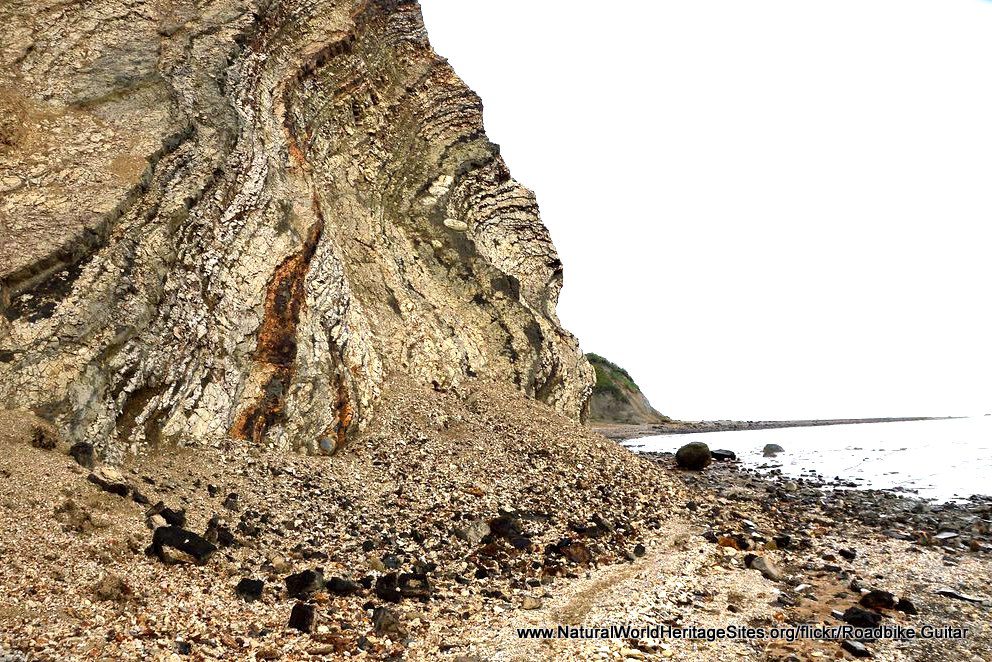
The Western Limfjord World Heritage Site comprises the coastal cliffs of Hanklit on the island of Mors, and the Knudeklint cliff on Furs Island, about 25km away. Both components of this serial site are small – each about the size of five football pitches (3-4 hectares). They cover the rugged coastal cliff exposures which exhibit diatom-rich marine sediments inter-bedded with more than 200 volcanic ash layers associated with the opening of the North Atlantic. These strata have subsequently been buckled and contorted by glacio-tectonic deformation during the last ice age when massive ice sheets weighed on the Earth’s crust in this region (as also demonstrated in Denmark’s Mons Klint World Heritage Site)
The exceptional attributes which qualify the Westerm Limfjord site for World Heritage listing are:
- Its abundant, diverse and exceptionally well-preserved fish fossils. More than 80 species of ‘modern’ ray-finned fishes that emerged after the Cretaceous-Paleogene mass extinction are represented;
- Record of the impact of the PETM on Life on Earth, and the accompanying geochemical changes which took place over this short period of acute global warming;
- Geological strata. The diatomite-rich fossil beds with their volcanic ash layers provide an exceptionally pristine and accessible reference providing insight into Life on Earth during the early years of the Eocene epoch following the PETM
Conservation Status and Prospects.
According to IUCN’s technical evaluation of this nomination The Bony Fish Fossils of the Western Limfjord World Heritage Site is not under any significant threat. Much of the land is privately owned and there are multiple stakeholder agencies and legislation involved in the protection and curation of fossils. Coastal erosion occurs naturally, maintaining the cliff exposures and yielding new fossil discoveries. The possibility of human-related threats such as unmanaged visitor access, uncontrolled collecting and land-use changes in areas bordering the site are thought to be of little consequence.
Links:
Google Earth
Slideshow description
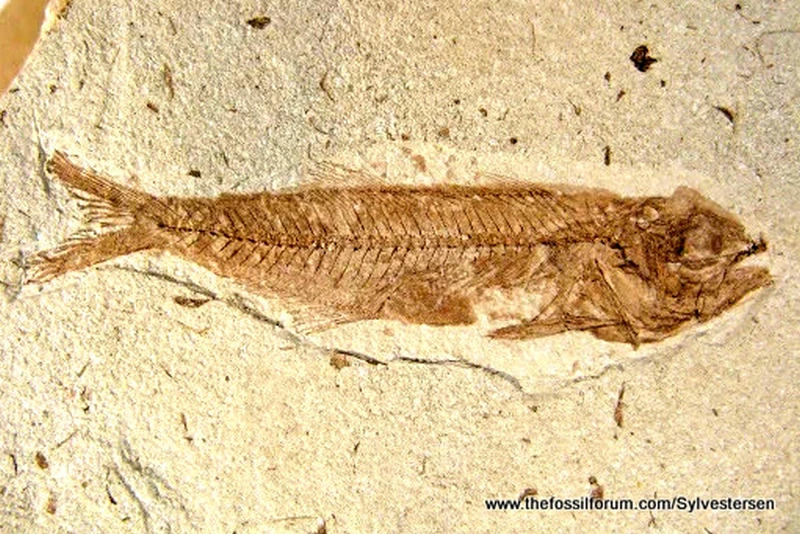
The short slideshow illustrates some of the landscape features of the site including the clearly contorted strata of the underlying geology of the exposed cliff faces. The diversity of fish fossils discovered at the site is illustrated with photos from the Fossil Forum website, including specimens of species closely related to familiar modern-day marine fish such as herring, mackerel , cod and pufferfish. In addition there are well-preserved fossil specimens of Antigonia, Holosteus, Horse Mackerel, Opah, John Dory/St Peter’s Fish, Butterfish, Needlefish, Redfish, Percoid Fish and Mene. Finally there is a photo of one of the nearby mo-clay quarries (outside the site) to illustrate that ongoing extraction of the fossil-bearing material is continuing, yielding interesting further fossils. There are also new fossil finds resulting from ongoing natural processes of erosion of the cliffs themselves. Photo credits are provided in the watermarks of each image.
Factfile
Website Category:
Area: 0.07 km²
Inscribed: 2026
Criteria:
- Fossil Record (viii)

