
EXPLORE the Vjetrenica Cave, Ravno with this slideshow, check the location map and get all the facts and information below.


For slideshow description see right or scroll down (mobile). Click to view slideshow
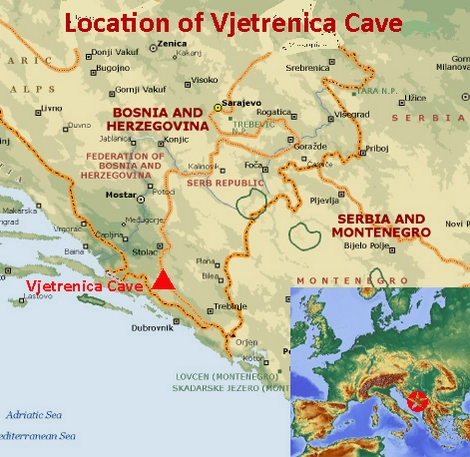
Location and Values: The Vjetrenica Cave, Ravno is located in the South Dinaric Karst range in southern Bosnia and Herzegovina. It extends for 7.3 km underground and is recognised as one of the world’s most important sites for cave fauna. It is inhabited by more than 49 species restricted to underground habitats (known as ‘troglobites’) and a further 56 species living in underground water (so-called ‘stygobites’). These are mostly crustaceans (36 species), gastropods (11), insects (11), arachnids (9) and myriapods (8). Most significantly, the genus Niphargus (a kind of small freshwater shrimp) demonstrates an extraordinary degree of local evolutionary radiation with nine distinct species within the genus. Other notable troglobites include the Olm (a subterranean aquatic salamander) and the only subterranean tubeworm in the world. Several of the species found in Vjetrenica Cave can be considered living fossils whose closest relatives went extinct during the Tertiary and pre-Tertiary periods.
The terrestrial habitats outside the cave (mostly designated as a ‘buffer zone’) support a diversity of plant species endemic to the Balkans and a number of globally threatened animals, including the Balkan snow vole, several species of birds, a reptile, two species of fish and three molluscs.
Conservation Status and Prospects. According to IUCN’s Conservation Outlook Assessment (2025) the conservation status of the Vjetrenica Cave, Ravno is ‘good’. IUCN’s evaluation of the World Heritage nomination dossier noted that the site’s main attributes are fragile, and prone to impacts from upstream areas of the catchment outside the cave. Changes in water regimes and pollution could impact the abundance and survival of important cave-dwelling species.
Although no immediate threats are apparent, IUCN noted a need for vigilance in monitoring potential threats from increased visitation, associated pollution, and any development projects within the catchment. Potential sources of pollution include new weekend homes and tourist facilities with inadequate sewage treatment infrastructure as well as possible illegal land-fill sites in the catchment area.
LINKS:
Slideshow description
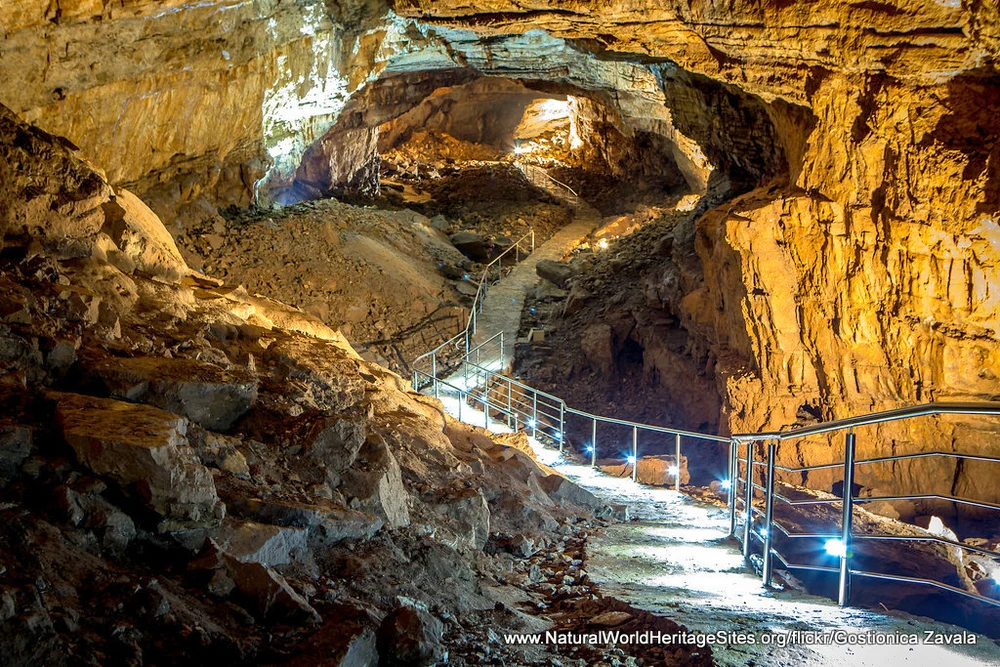
Slideshow Description: The slideshow ‘tells the story’ of the Vjetrenica Cave, Ravno with a portfolio of photos that illustrate the main features of the cave interior and a short selection of the cave fauna, including the olm (Proteus anguinus), a species of cave amphipod (Typhlogammarus mrazeki) and a cave beetle (Hadesia vasiceki).
Most of the photos were taken by Gostionica Zavala with additional contributions by Alex Lim, Frederick Fung, Roman Ozimec and Bostjan Burger (Wikipedia). Photo credits are provided in the watermarks of each image.
Factfile
Website Categories:
Area: 4 km2
Inscribed: 2024
Criteria:
- Natural habitat for biodiversity (x);
- Significant number of rare, endemic and/or endangered species (x)

